
Recessed downlights, surface-mounted spots and adjustable bars for kitchens, halls, bathrooms and task areas.
How many you need and where to put them is below the collection.
Placement beats quantity
The most common mistake with spots is treating them as a grid. Somebody divides the ceiling into equal squares, puts a light in the middle of each, and ends up with a room that is bright, flat and oddly unpleasant, with the worktops still in shadow.
Spots are directional. They are at their best pointed at something: a worktop, a wall, a run of shelving, a piece of art. Used that way, six will do more than twelve arranged evenly, and they will cost less to run.
The other half of the fix is not asking spots to do the whole job. A kitchen or a hall lit entirely by ceiling spots has no light at eye level at all, which is why it feels like a corridor after dark. Pair them with pendants, wall lights or lamps.
Where to put them
| Where | Placement | Spacing |
|---|---|---|
| Kitchen worktops | Over the front edge of the worktop, not the middle of the room | Roughly 1m apart along the run |
| General kitchen light | Clear of where you stand, so you are not working in your own shadow | 1.2–1.5m apart |
| Hallway | Down the centre, or angled at one wall to widen the space | 1.2–1.5m apart |
| Living room | Angled at walls, shelving or artwork rather than straight down | Use sparingly. Lamps do the real work in this room. |
| Bathroom | Over where you stand. Must be rated for the zone. | Confirm the rating with your electrician before ordering. |
| Sloped ceilings | Adjustable or gimbal fittings, aimed to correct the angle | A fixed spot on a pitch points at the wall, not the floor |
A good rule for the perimeter: keep spots roughly 60 to 90cm out from the wall. Any closer and they scallop the wall with bright arcs. Any further and the edges of the room go dark.
Recessed or surface-mounted?
Recessed downlights sit inside the ceiling and disappear. They need a void above to sit in, which rules them out in some rooms, and cutting them into a finished ceiling is a messy job.
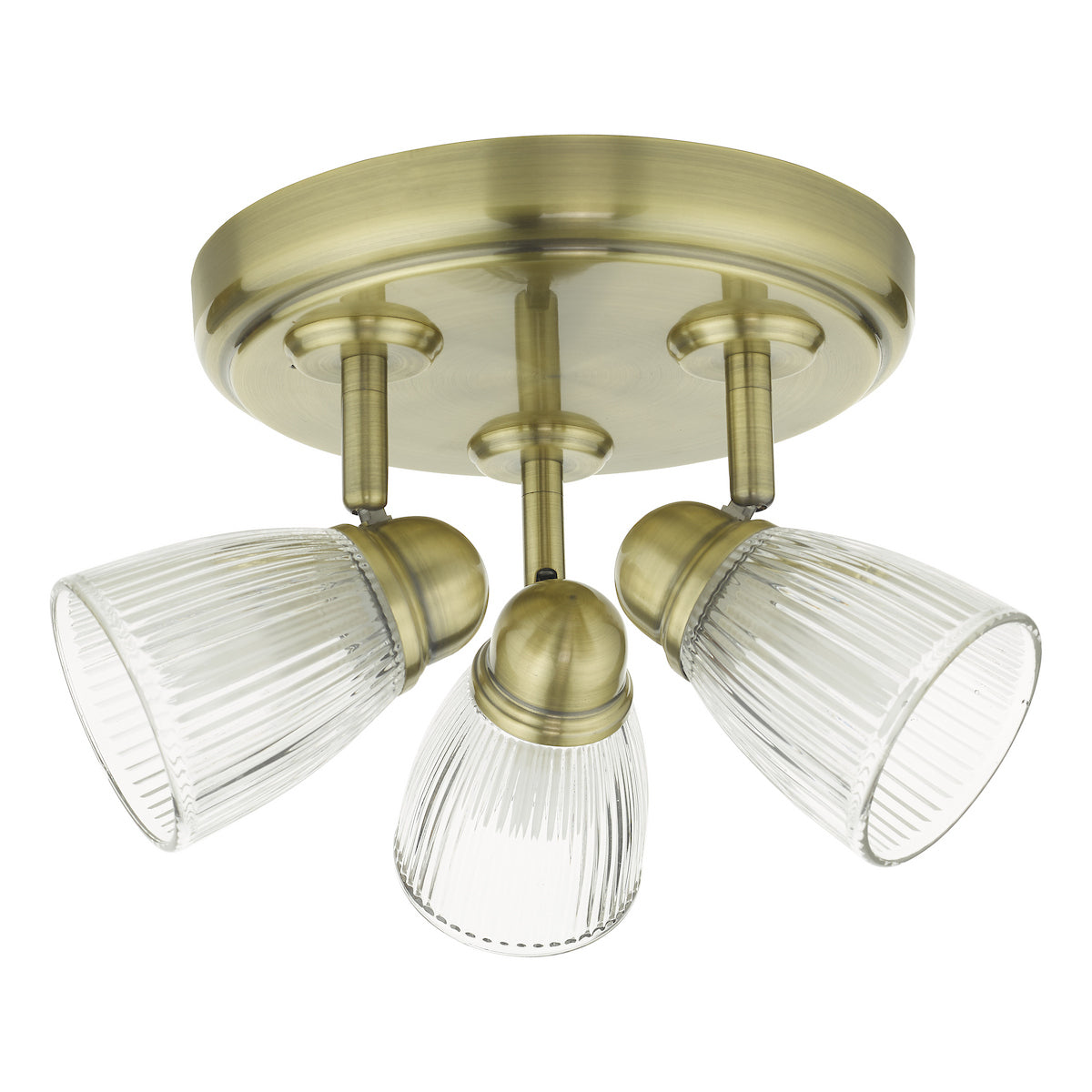
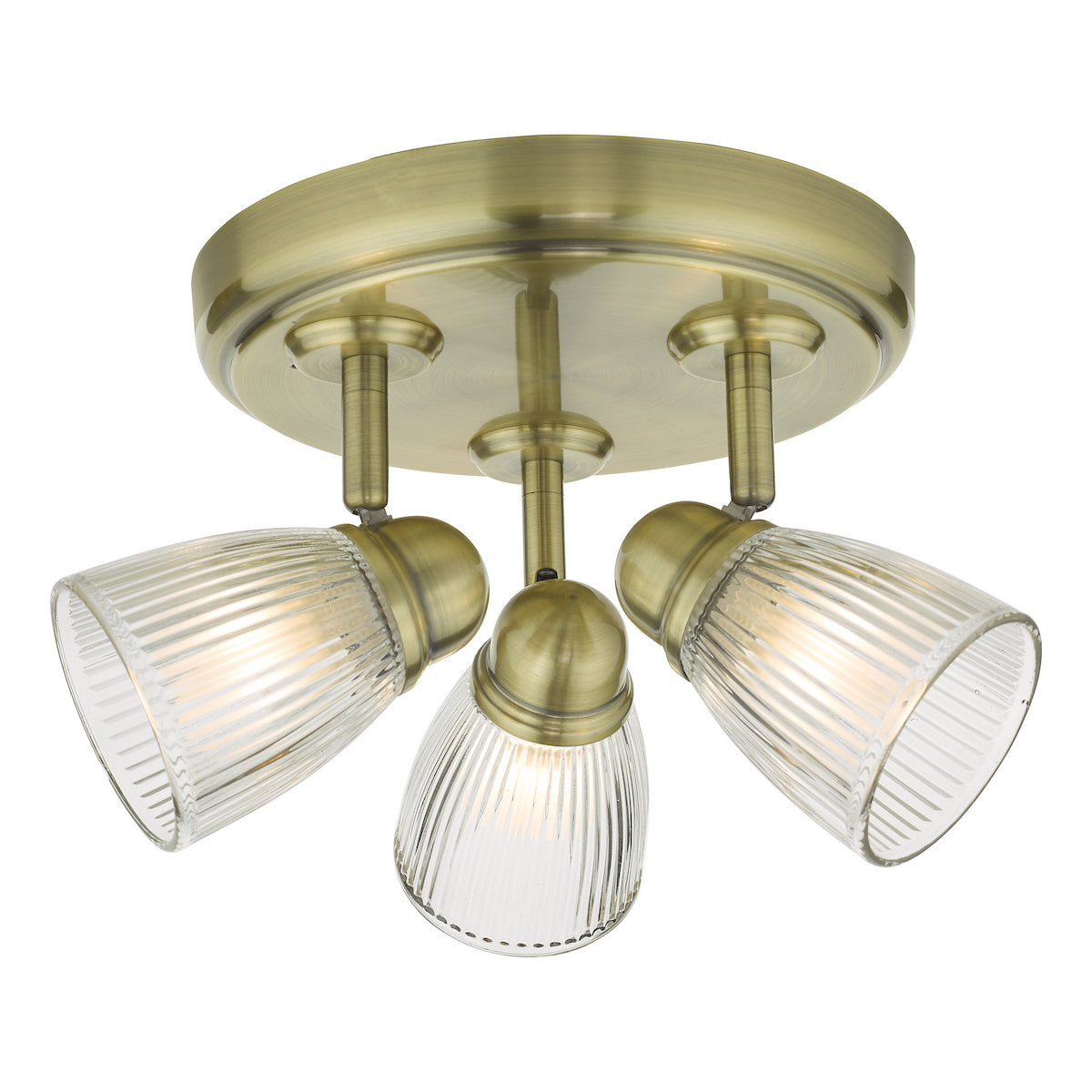
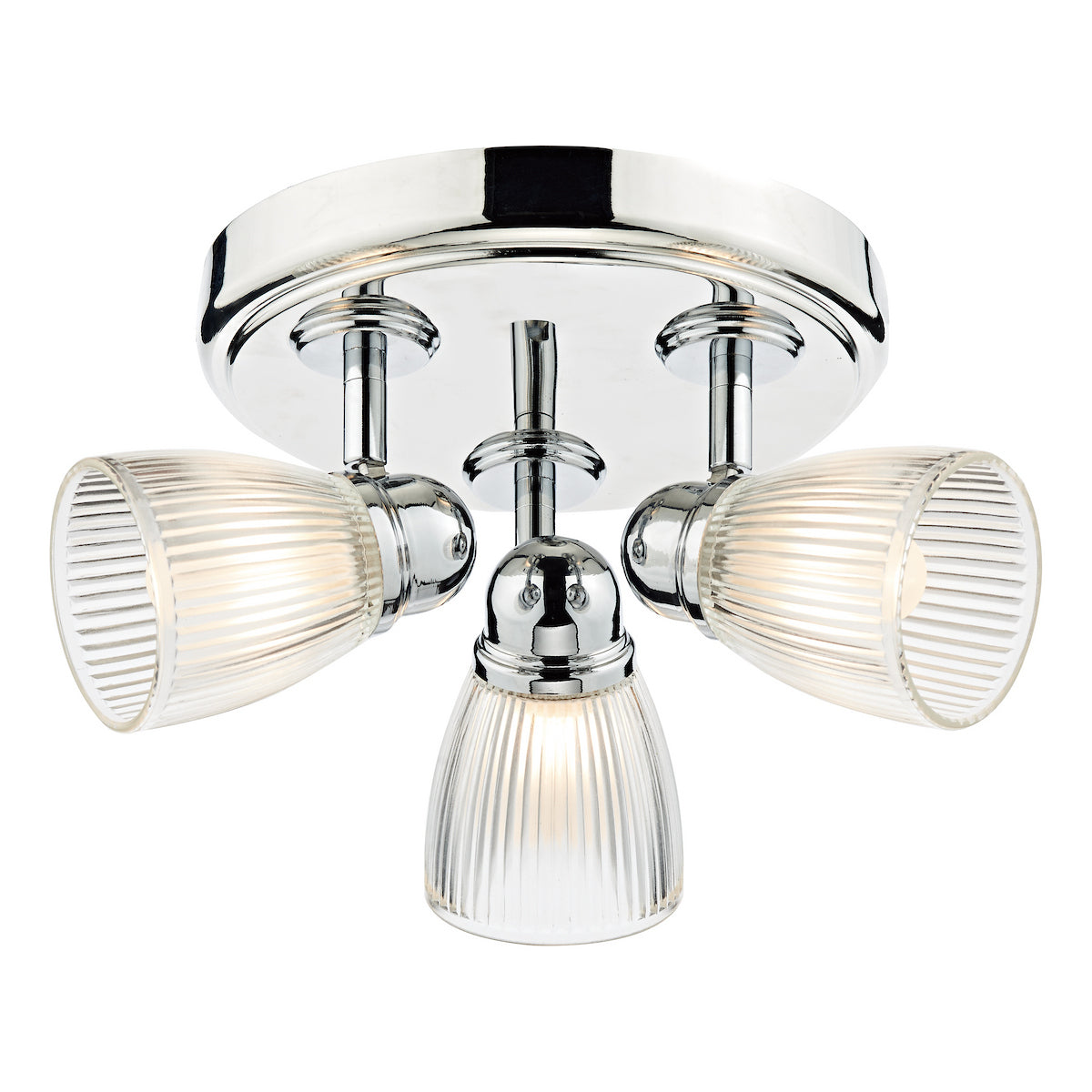
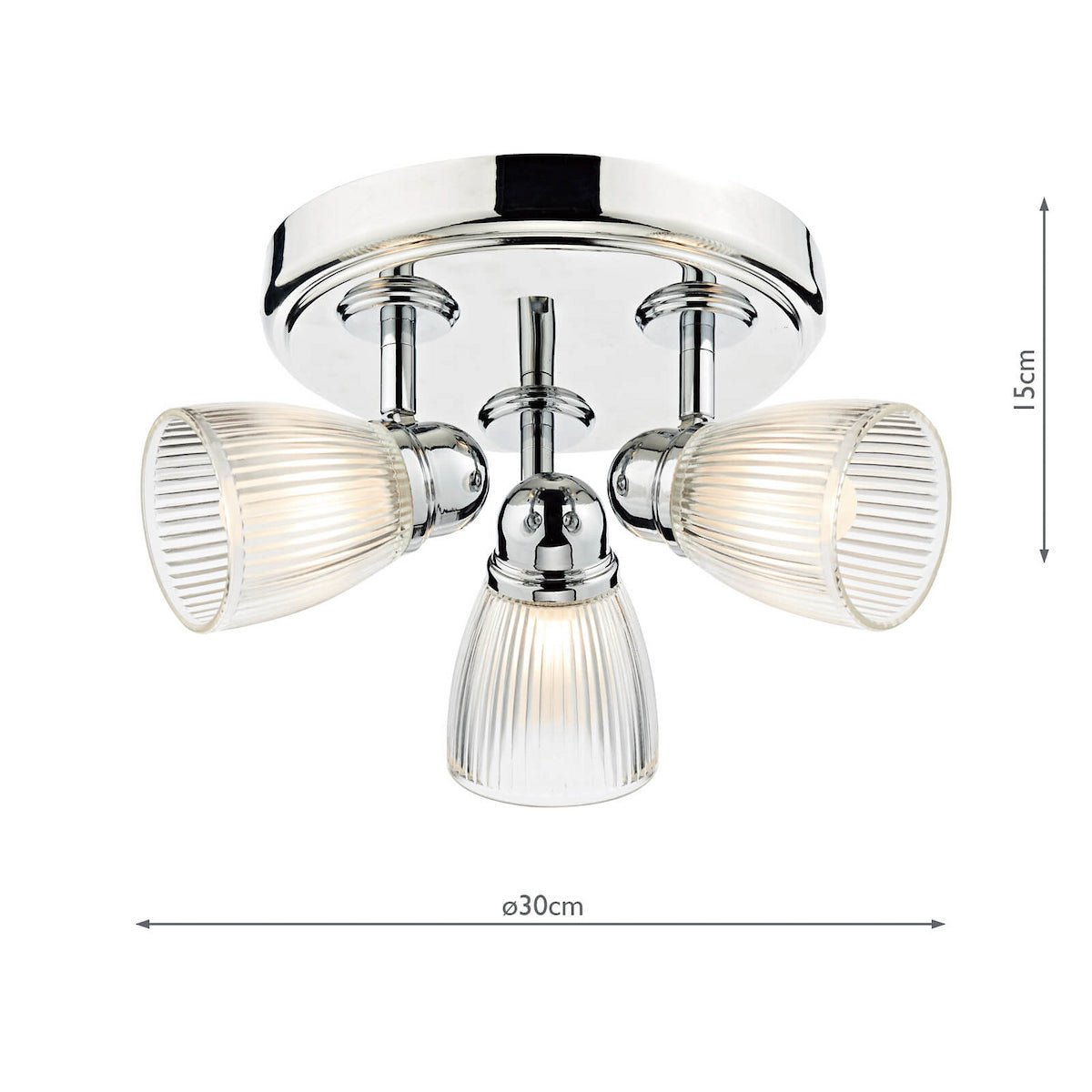
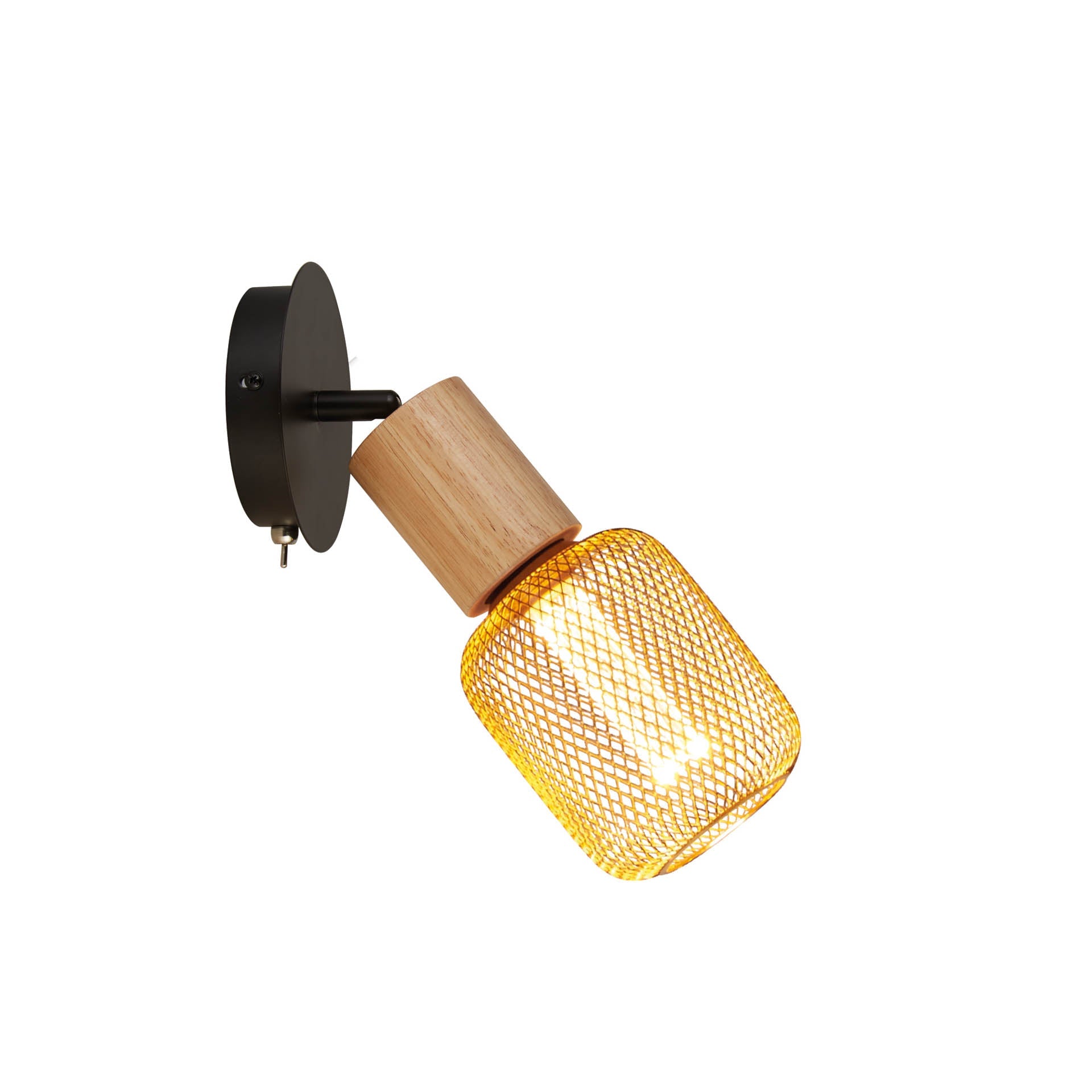
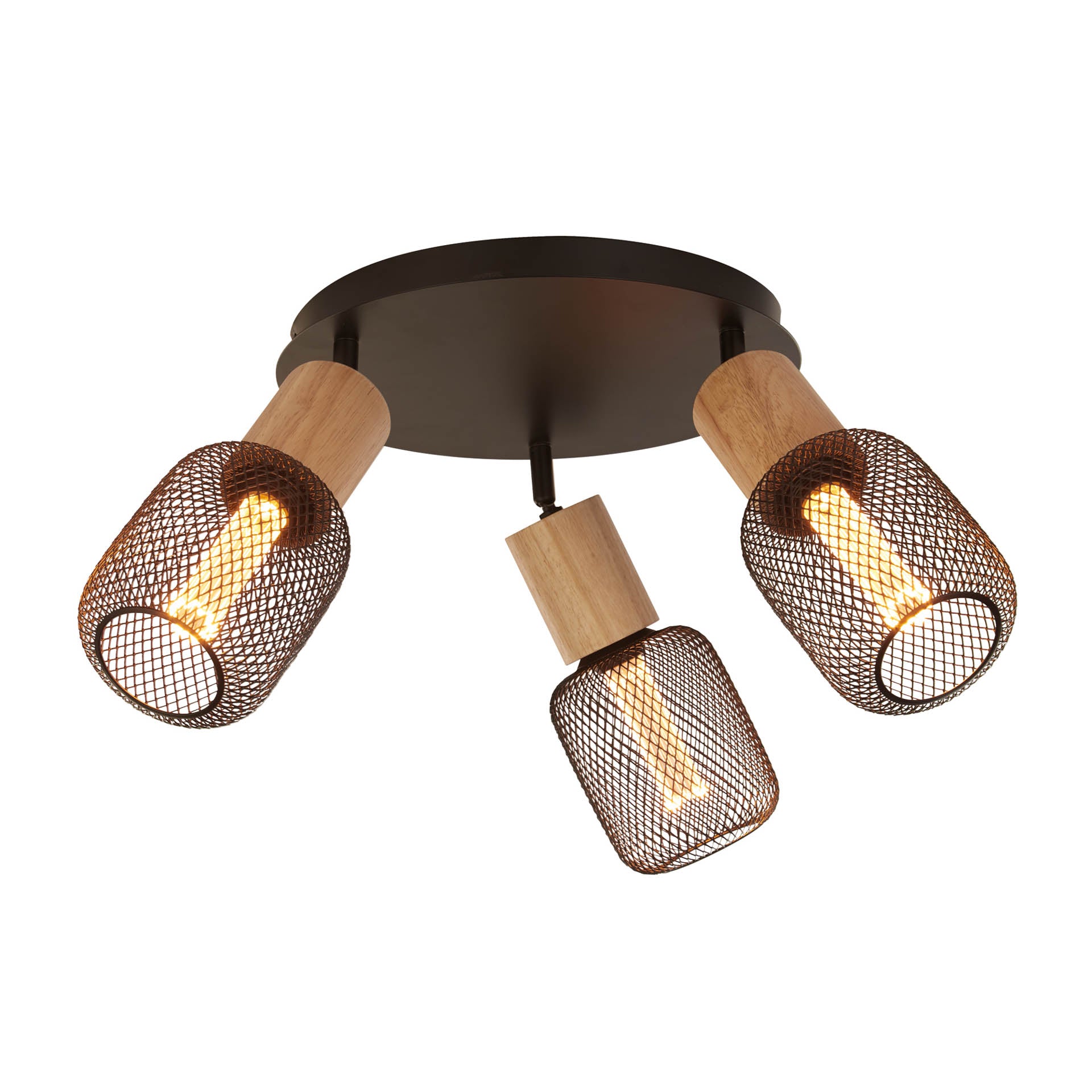
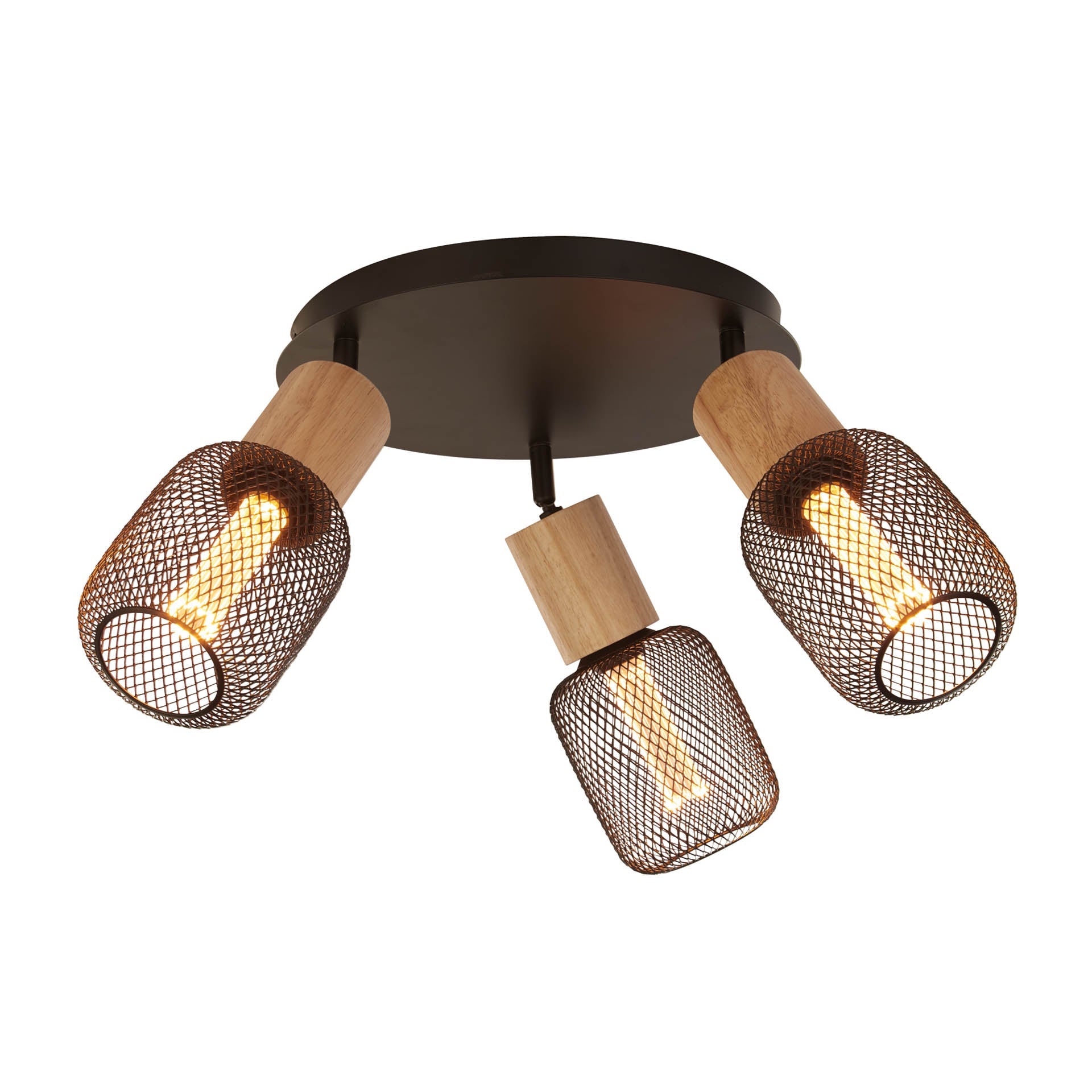
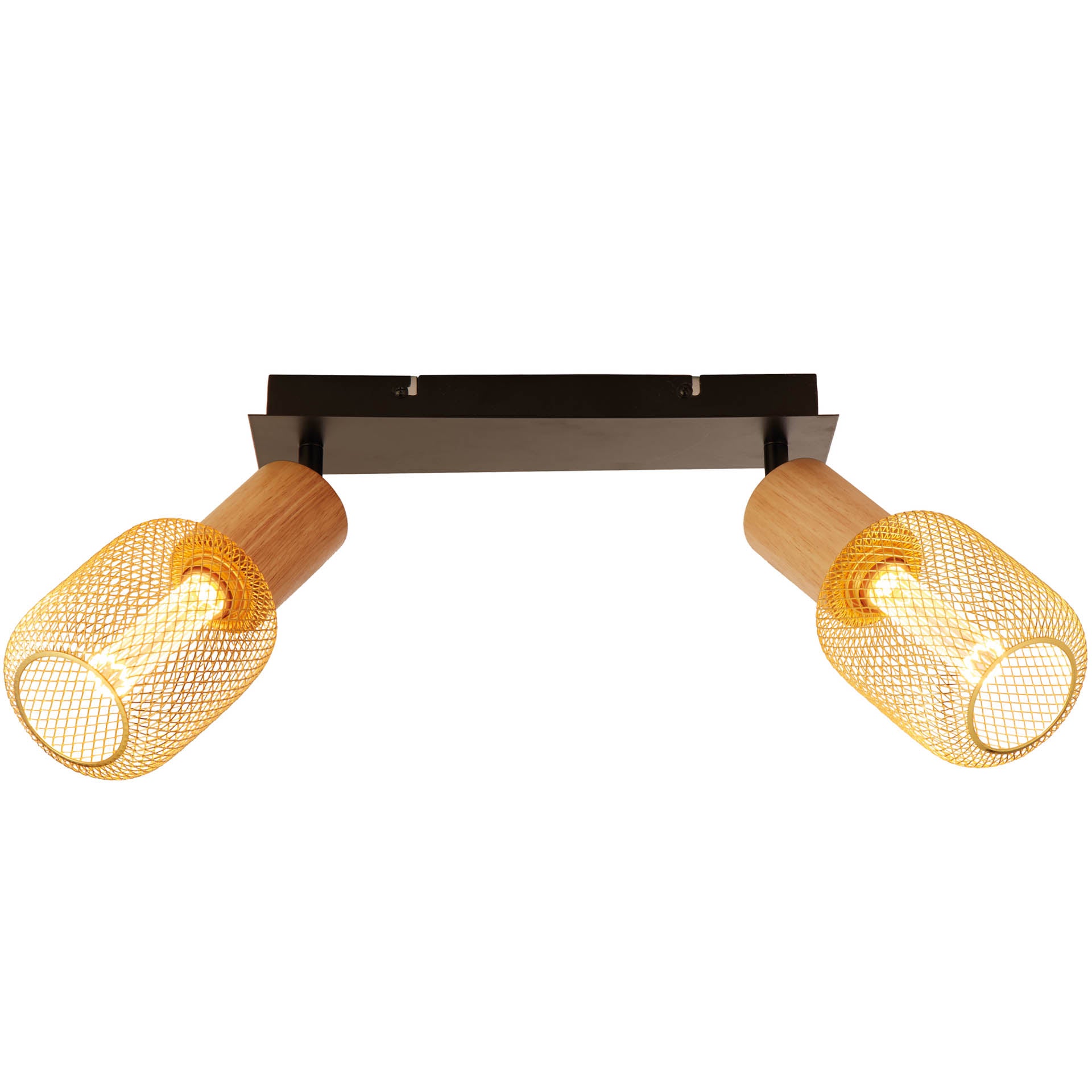
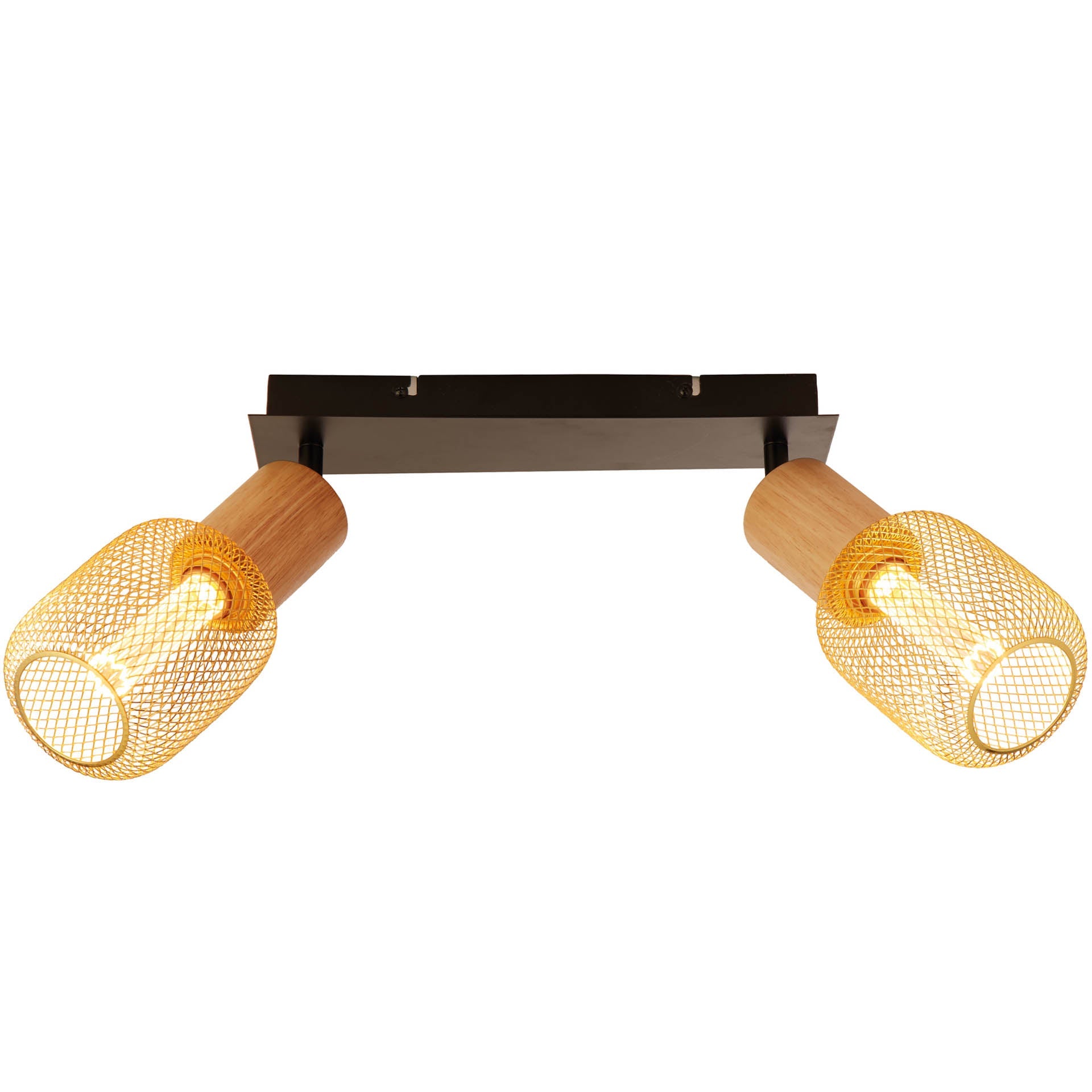
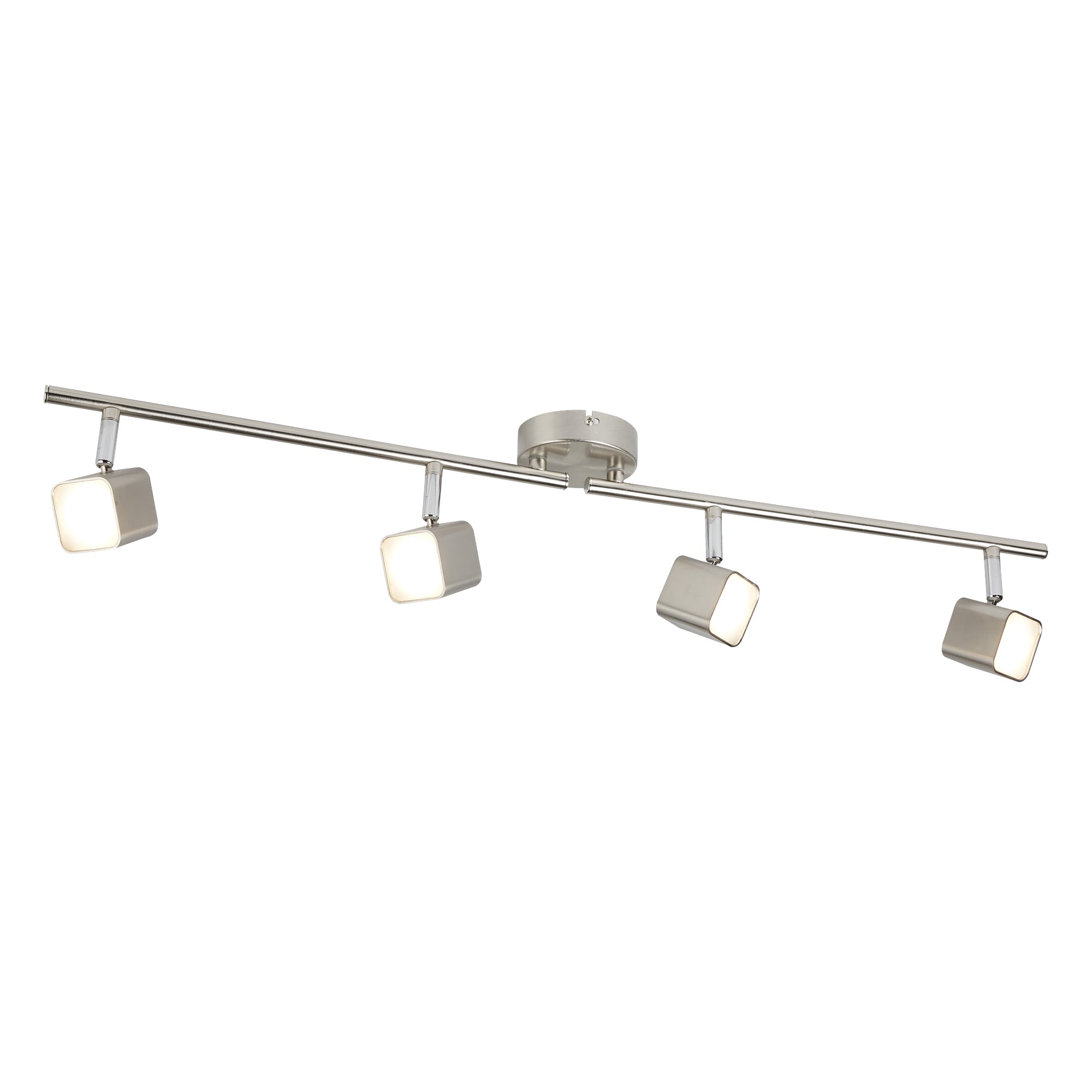
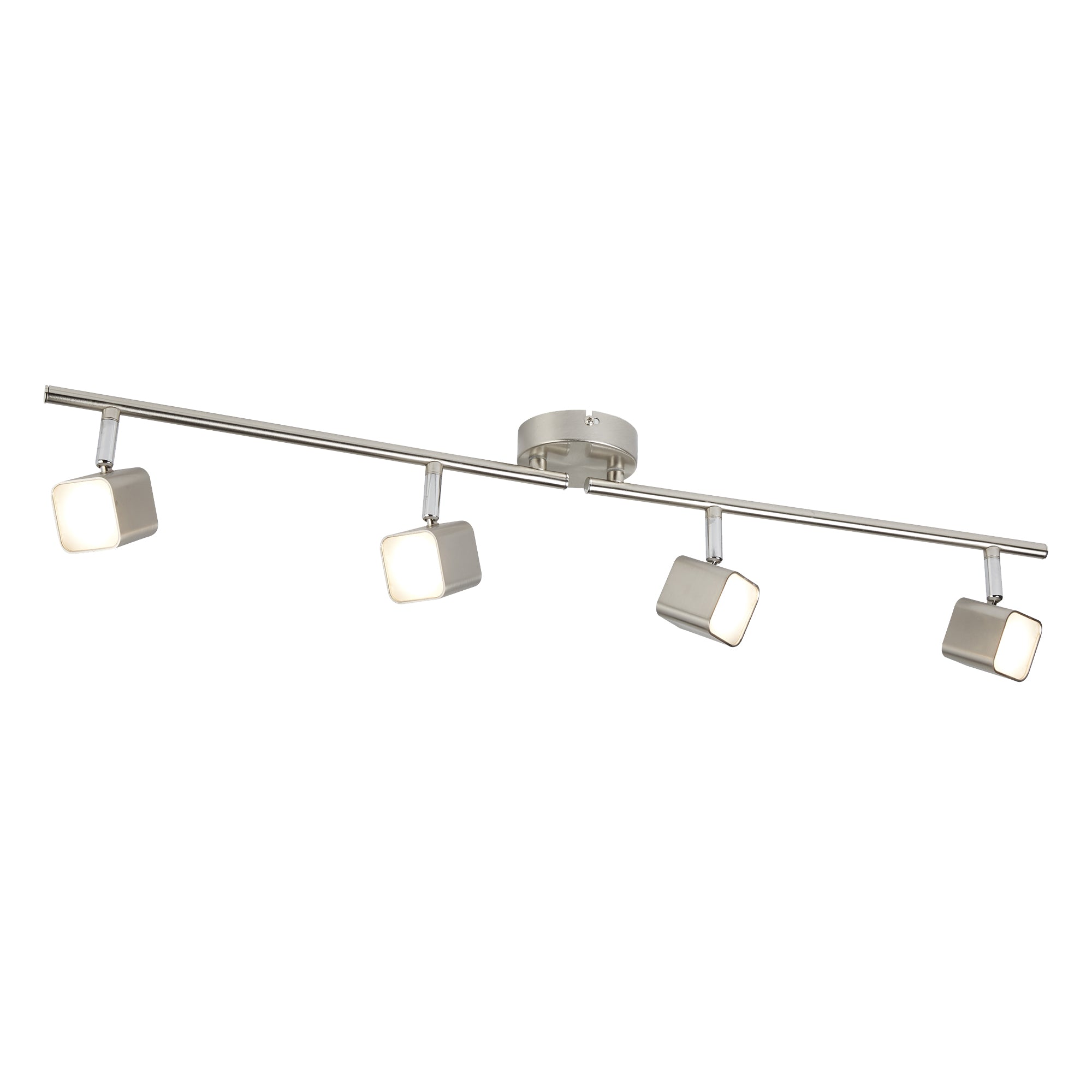
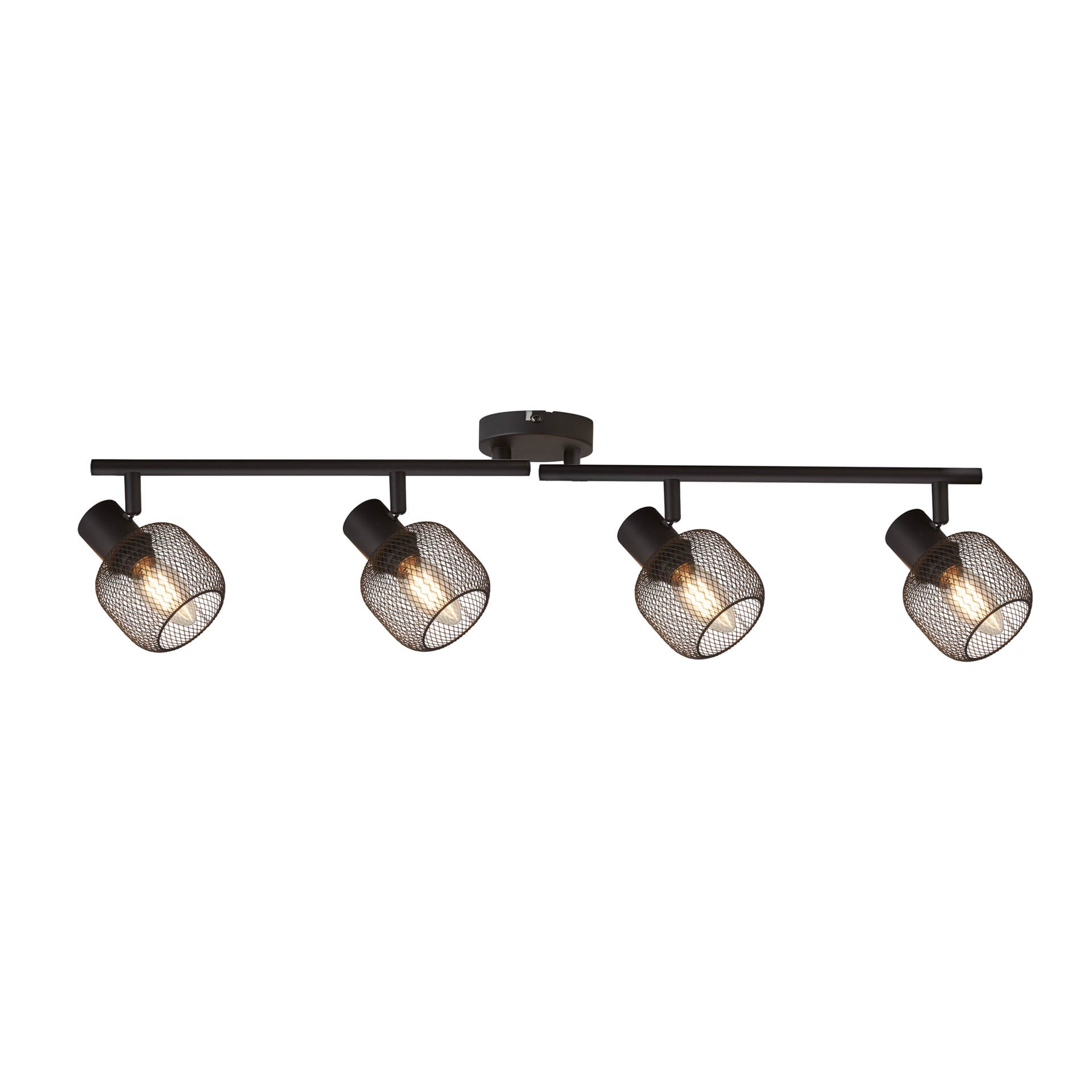
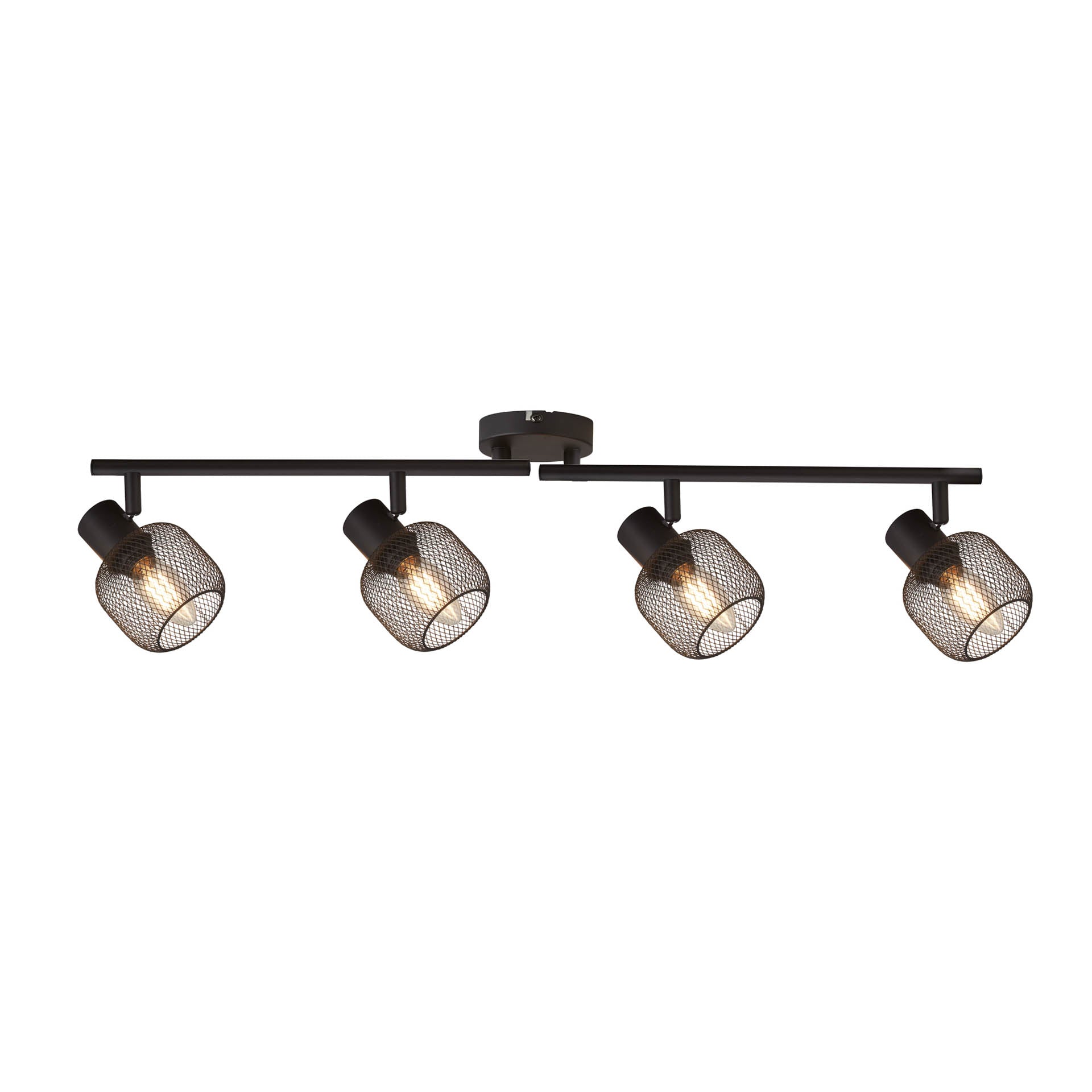
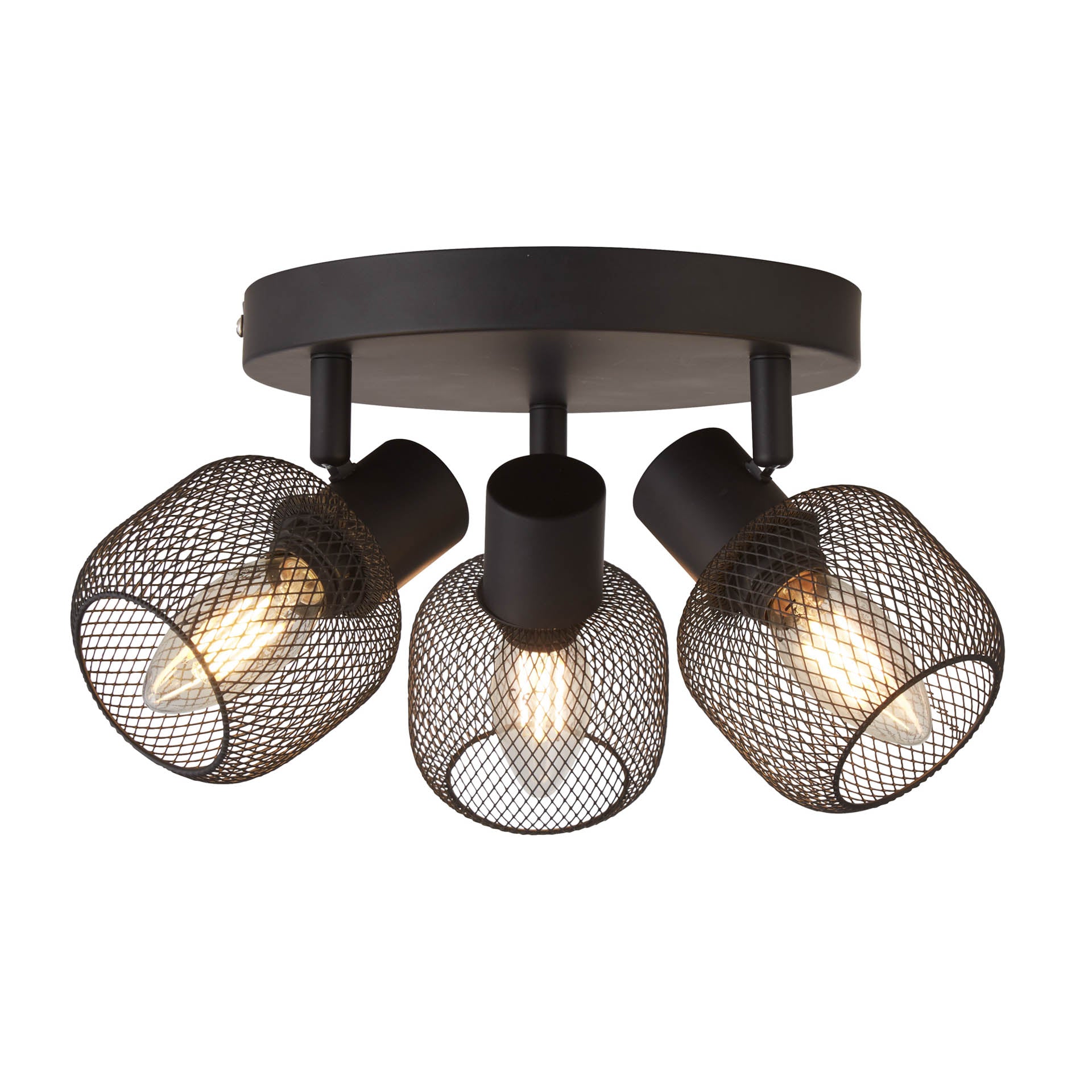
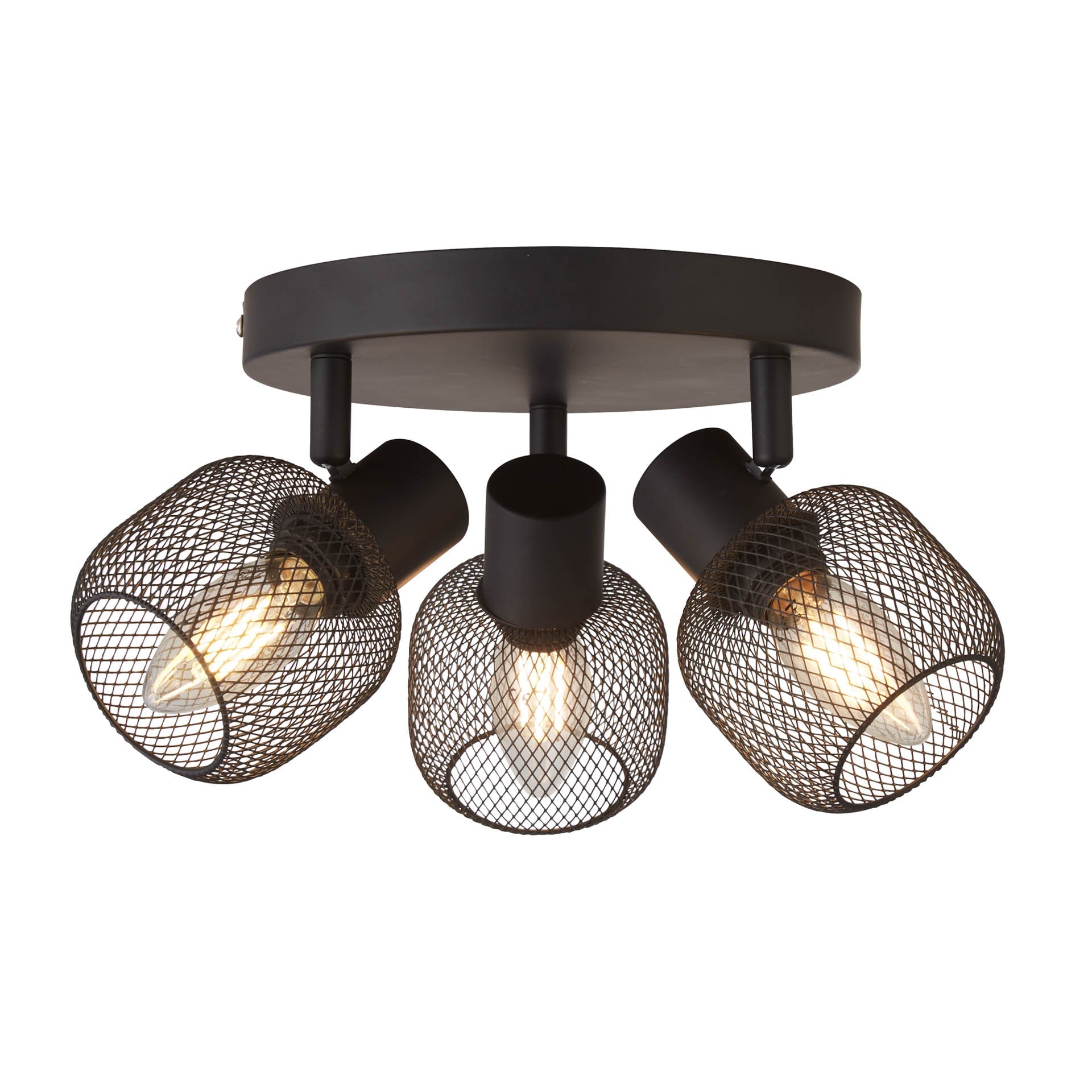
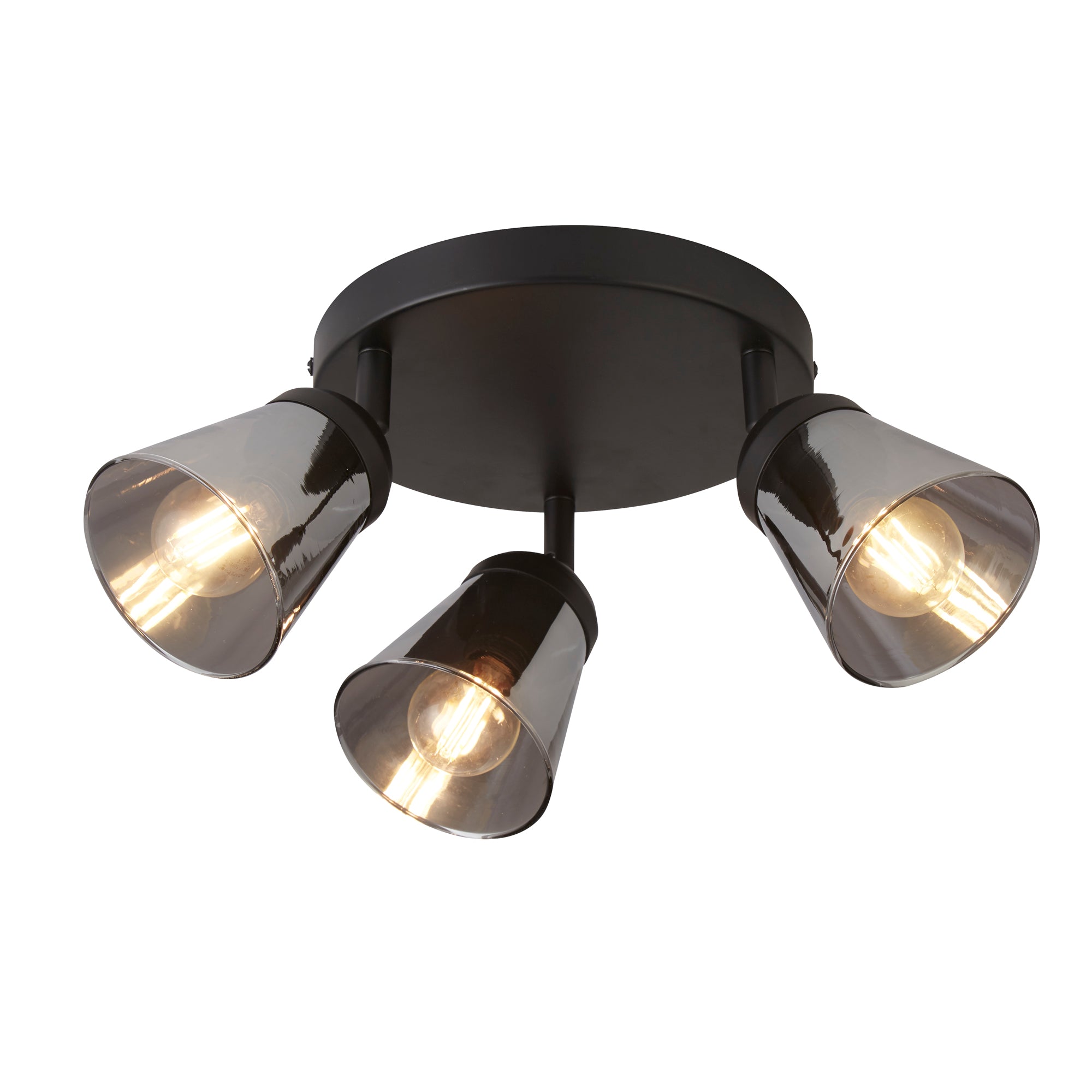
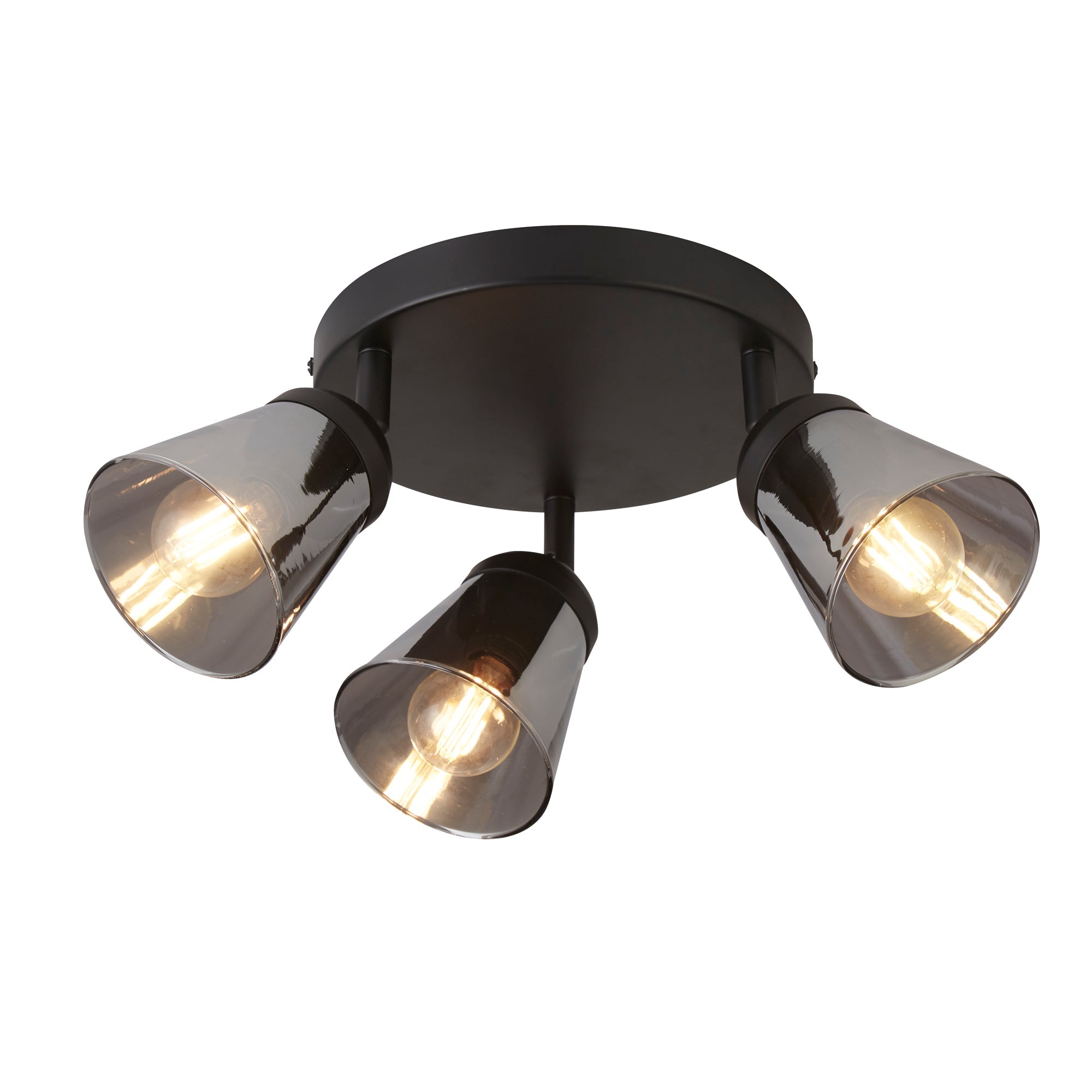
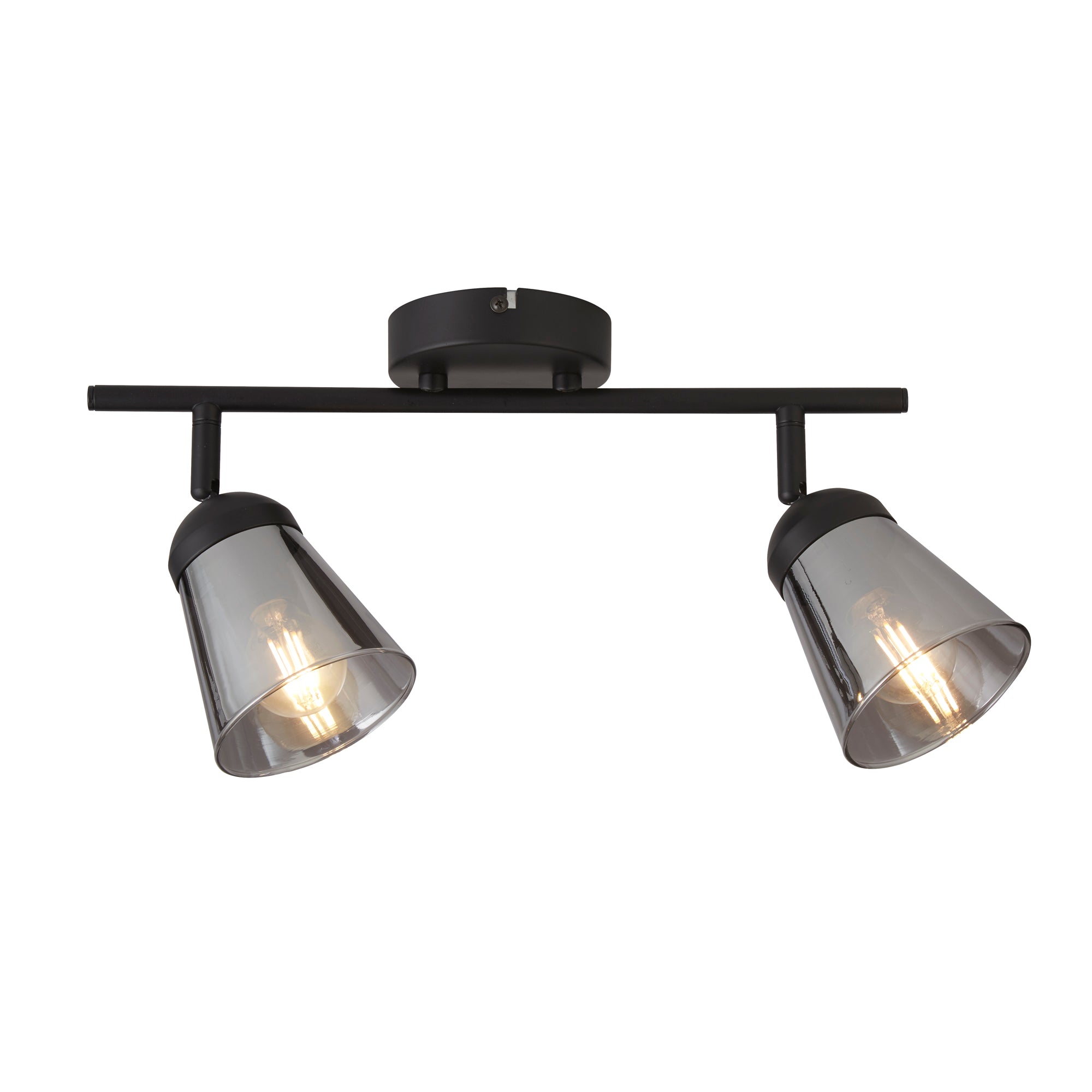
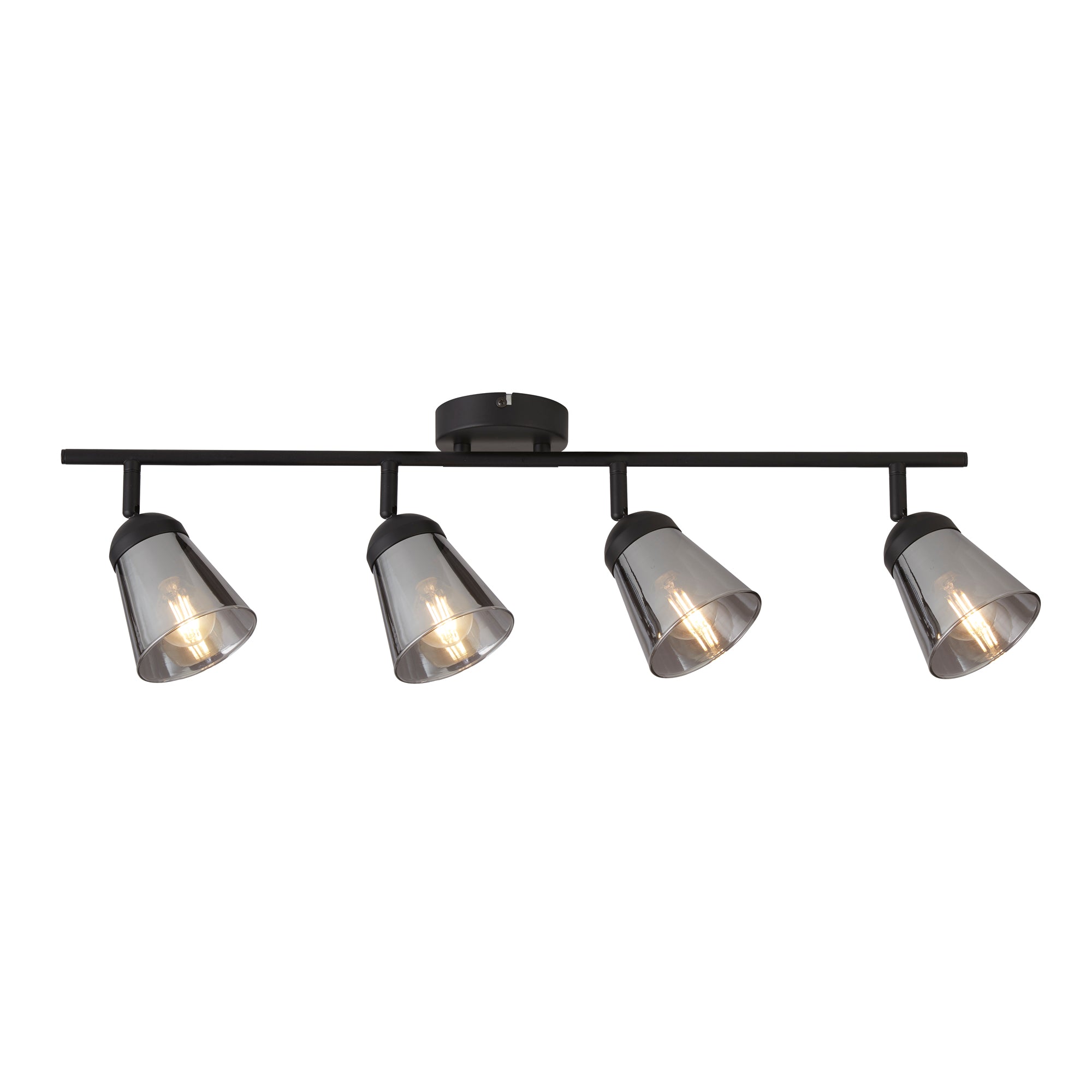
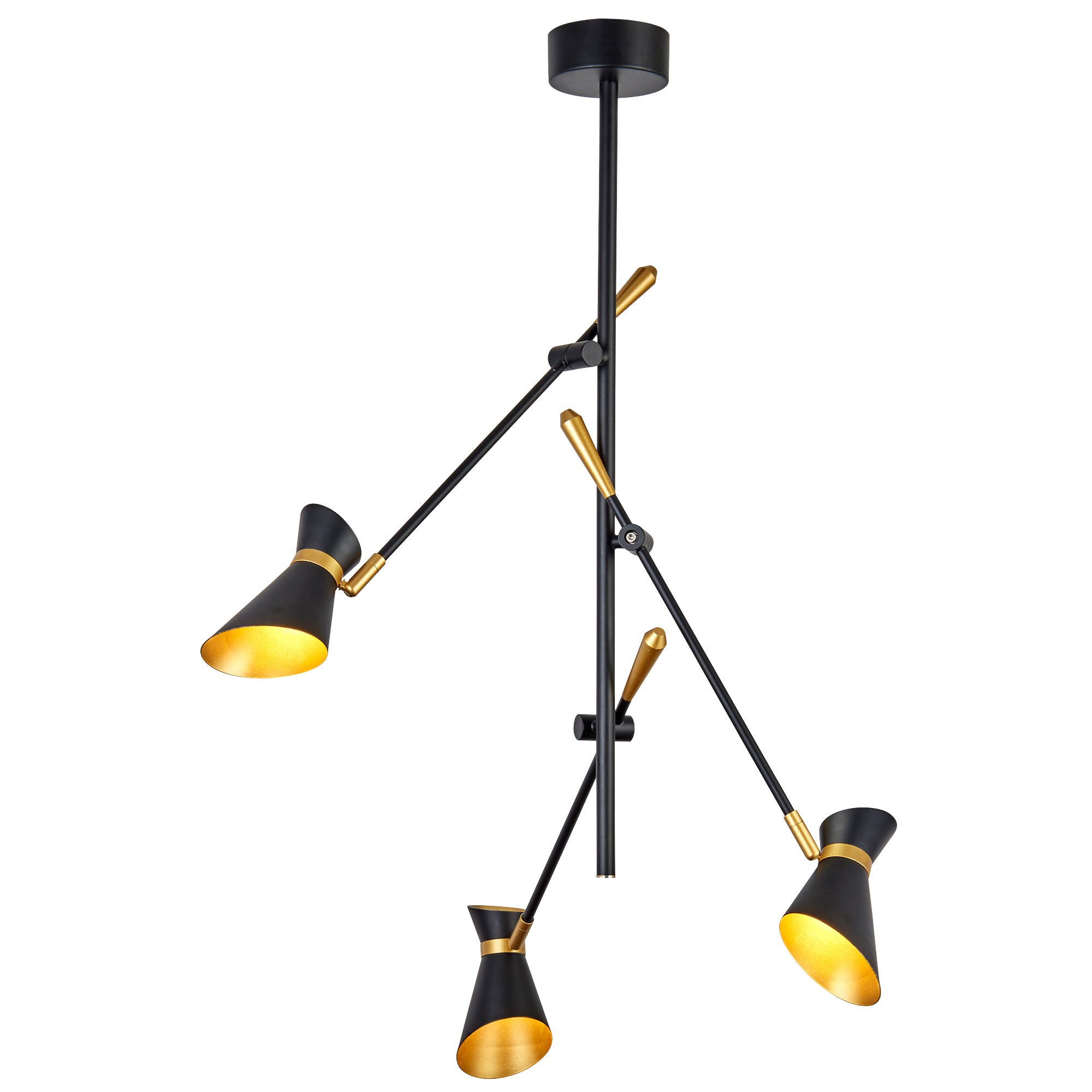
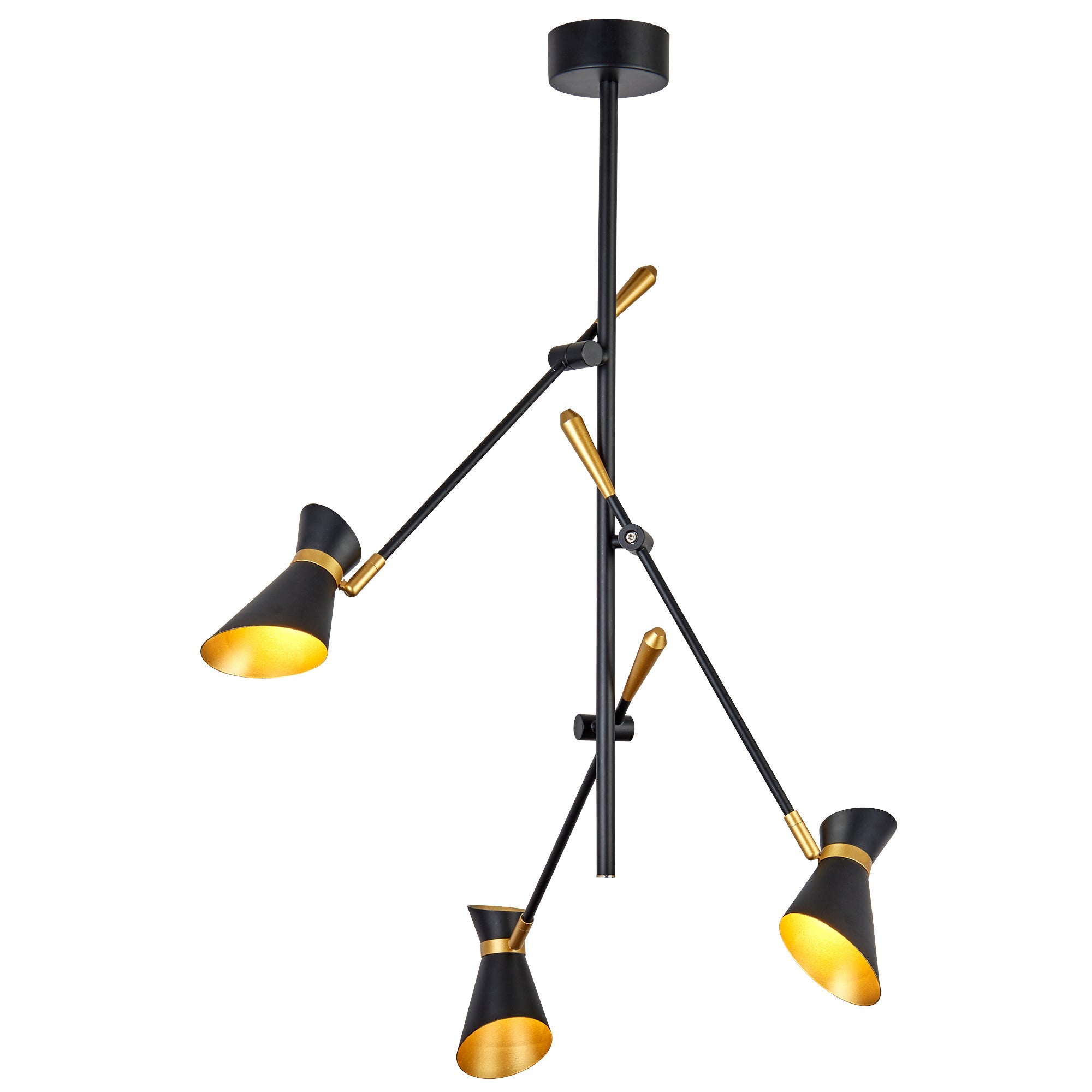
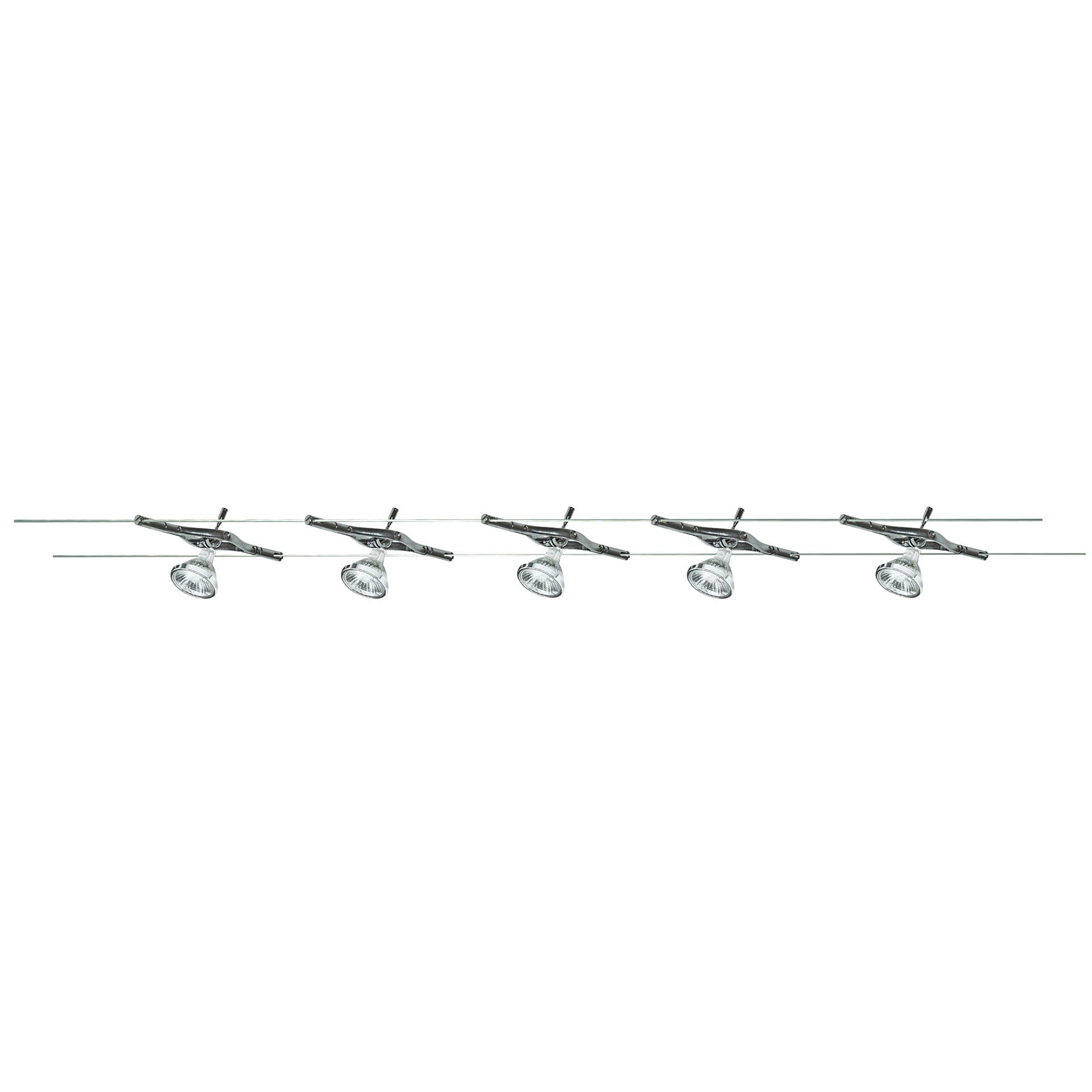
Surface-mounted spots and bars fix to the ceiling and need no void. That makes them the practical choice for concrete ceilings, apartments, and any room you would rather not open up. Bars carrying several adjustable heads are useful where you want to light three different things from one fixing point.
Fire ratings and ceiling voids
Cutting holes in a ceiling that separates one floor from another affects how that ceiling performs in a fire, which is why fire-rated downlights exist. Whether your situation requires them depends on the construction of the ceiling.
This is a question for your electrician, and it is worth asking before the fittings are ordered rather than after the holes are cut. The same applies to insulation contact, since not every fitting can be covered over.
Beam angle and dimming
A narrow beam gives a tight, dramatic pool, which suits artwork and shelving. A wider beam spreads light and suits general use. Mixing both in one room is how you get depth rather than an even wash.
Put spots on a dimmer if you can, particularly in a kitchen, so the same ceiling can go from full task light to something you would happily sit under. Check the dimmer is rated for LED, since older halogen dimmers are the usual cause of flicker.
Installation
All of this should be installed by an electrician registered with Safe Electric. Spots involve cutting into ceilings and, in bathrooms, meeting specific ratings, so it is worth having the layout agreed before anyone starts.
Talk it through with us
Spot layouts are much easier to work out with a floor plan in front of you than from a product page. Bring the dimensions into our showroom in Donabate, Co. Dublin and we will help you work out how many you actually need, which is usually fewer than people expect.
Spot lights: your questions answered
How many downlights do I need?
Fewer than most people fit. Position matters far more than quantity. Six spots aimed at worktops, walls and shelving will outperform twelve arranged in an even grid, and cost less to run.
How far apart should spot lights be?
Roughly 1.2 to 1.5m apart for general light, and about 1m along a run of kitchen worktop. Keep them 60 to 90cm out from the walls: closer and you get bright scallops on the wall, further and the edges of the room go dark.
Browse the rest of the range
Recently viewed
Match Your Switch
Spot Lights
Recessed downlights, surface-mounted spots and adjustable bars for kitchens, halls, bathrooms and task areas.
How many you need and where to put them is below the collection.
Placement beats quantity
The most common mistake with spots is treating them as a grid. Somebody divides the ceiling into equal squares, puts a light in the middle of each, and ends up with a room that is bright, flat and oddly unpleasant, with the worktops still in shadow.
Spots are directional. They are at their best pointed at something: a worktop, a wall, a run of shelving, a piece of art. Used that way, six will do more than twelve arranged evenly, and they will cost less to run.
The other half of the fix is not asking spots to do the whole job. A kitchen or a hall lit entirely by ceiling spots has no light at eye level at all, which is why it feels like a corridor after dark. Pair them with pendants, wall lights or lamps.
Where to put them
| Where | Placement | Spacing |
|---|---|---|
| Kitchen worktops | Over the front edge of the worktop, not the middle of the room | Roughly 1m apart along the run |
| General kitchen light | Clear of where you stand, so you are not working in your own shadow | 1.2–1.5m apart |
| Hallway | Down the centre, or angled at one wall to widen the space | 1.2–1.5m apart |
| Living room | Angled at walls, shelving or artwork rather than straight down | Use sparingly. Lamps do the real work in this room. |
| Bathroom | Over where you stand. Must be rated for the zone. | Confirm the rating with your electrician before ordering. |
| Sloped ceilings | Adjustable or gimbal fittings, aimed to correct the angle | A fixed spot on a pitch points at the wall, not the floor |
A good rule for the perimeter: keep spots roughly 60 to 90cm out from the wall. Any closer and they scallop the wall with bright arcs. Any further and the edges of the room go dark.
Recessed or surface-mounted?
Recessed downlights sit inside the ceiling and disappear. They need a void above to sit in, which rules them out in some rooms, and cutting them into a finished ceiling is a messy job.
Surface-mounted spots and bars fix to the ceiling and need no void. That makes them the practical choice for concrete ceilings, apartments, and any room you would rather not open up. Bars carrying several adjustable heads are useful where you want to light three different things from one fixing point.
Fire ratings and ceiling voids
Cutting holes in a ceiling that separates one floor from another affects how that ceiling performs in a fire, which is why fire-rated downlights exist. Whether your situation requires them depends on the construction of the ceiling.
This is a question for your electrician, and it is worth asking before the fittings are ordered rather than after the holes are cut. The same applies to insulation contact, since not every fitting can be covered over.
Beam angle and dimming
A narrow beam gives a tight, dramatic pool, which suits artwork and shelving. A wider beam spreads light and suits general use. Mixing both in one room is how you get depth rather than an even wash.
Put spots on a dimmer if you can, particularly in a kitchen, so the same ceiling can go from full task light to something you would happily sit under. Check the dimmer is rated for LED, since older halogen dimmers are the usual cause of flicker.
Installation
All of this should be installed by an electrician registered with Safe Electric. Spots involve cutting into ceilings and, in bathrooms, meeting specific ratings, so it is worth having the layout agreed before anyone starts.
Talk it through with us
Spot layouts are much easier to work out with a floor plan in front of you than from a product page. Bring the dimensions into our showroom in Donabate, Co. Dublin and we will help you work out how many you actually need, which is usually fewer than people expect.
Spot lights: your questions answered
How many downlights do I need?
Fewer than most people fit. Position matters far more than quantity. Six spots aimed at worktops, walls and shelving will outperform twelve arranged in an even grid, and cost less to run.
How far apart should spot lights be?
Roughly 1.2 to 1.5m apart for general light, and about 1m along a run of kitchen worktop. Keep them 60 to 90cm out from the walls: closer and you get bright scallops on the wall, further and the edges of the room go dark.